![[personal profile]](https://www.dreamwidth.org/img/silk/identity/user.png)
![[identity profile]](https://www.dreamwidth.org/img/silk/identity/openid.png)
A few days ago, while in working on the space robot, I was feeling lazy and wanted to go home early. So I agreed to make a fairly simple, low-precision part on my lathe at home.
(All images are fairly large because I'm lazy.)
The drawing I was given to work with is here. (For the record,![[livejournal.com profile]](https://www.dreamwidth.org/img/external/lj-userinfo.gif) xmurf protests that it is far from his best CAD work.) The part is a standoff for one of the three cameras on the robot. Because of layout issues, the brace it is attached to is 0.375" away from where it needs to be to put the camera at the center. So this widget moves the camera up by that amount.
xmurf protests that it is far from his best CAD work.) The part is a standoff for one of the three cameras on the robot. Because of layout issues, the brace it is attached to is 0.375" away from where it needs to be to put the camera at the center. So this widget moves the camera up by that amount.
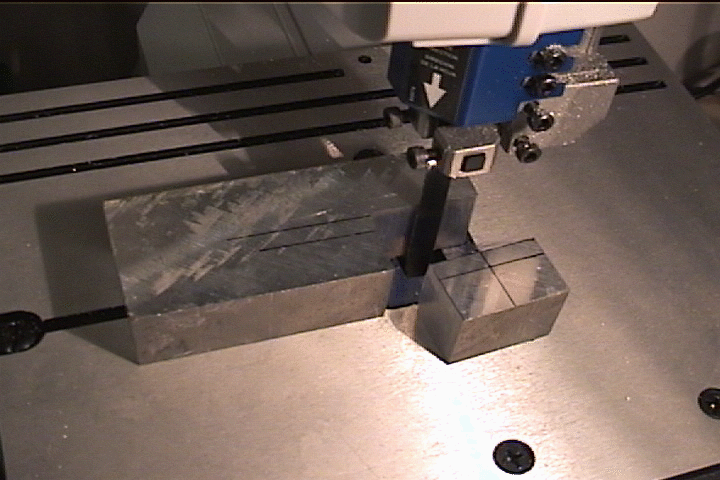
The first step was to cut a piece of aluminum. (Yay bandsaws! People who give me bandsaws rule.) This piece was then chucked up in the lathe and roughly centered. (People who give me lathes also rule!) The exact center didn't matter at this point, other than making sure that a circle of the correct diameter is actually in the piece as mounted. This was accomplished by lightly touching a sharpie close to the outside edge as it spun. The diameter of the trace is then easily measured.
With everything set up, I started turning the piece down. As the target diameter got close, it was checked against a reference with the use of outside calipers.
While not as messy as end milling, turning a part can throw up a decent amount of chips. This is made worse when first rounding a square part because you're only cutting from the edge instead of a single continuous cut. My workroom is decently equipped for a spare bedroom, but it's still just a spare bedroom -- with carpet. In order to minimize the obvious problem I was inspired to repurpose part of an old halloween costume. The end result was a perfectly functional chip shield.
After the entire piece was at 0.875" I then turned the second half down to a quarter of an inch. I'm not very pleased with the surface of the face. I went too deep early on, but I didn't have enough spare material to make that depth consistent. Luckily that face will be hidden when assembled.
With all the turning done, I proceeded to cut the base off. Looking back I obviously should have octagoned the remaining base after the separation cut. It would have been much easier and left me with a more useful leftover piece. I think it was because I had meant to octagon the original piece but had forgotten and was annoyed that I had forgotten. I'm kinda dumb sometimes. Oh well.
Next I needed to remove the final little bit of the base still attached to the part. I couldn't do it on the bandsaw because it would be too easy to cut into the actual part and the finish would be really ugly. So it needed to be faced off on the lathe. This would also allow me to drill the hole, but it would need to be properly centered to do that.
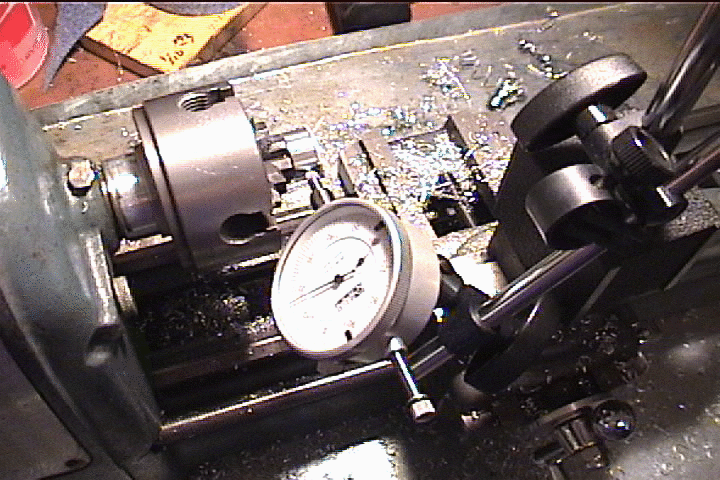
The chuck on the lathe is an independent four-jaw, which means each jaw moves on its own. This is great for holding oddly shaped parts, but it means that even round parts don't get centered without effort. (The other most common chuck, a three-jaw universal chuck, is basically like the chuck on a hand drill. All three jaws move together, so round parts are centered automatically.) So I had to use a dial indicator to center the part. The dial indicates small in-and-out movements of the shaft. By slowly turning the part this shows which side of the part is sticking too far out. After a lot of tedious adjustments the part ends up centered.
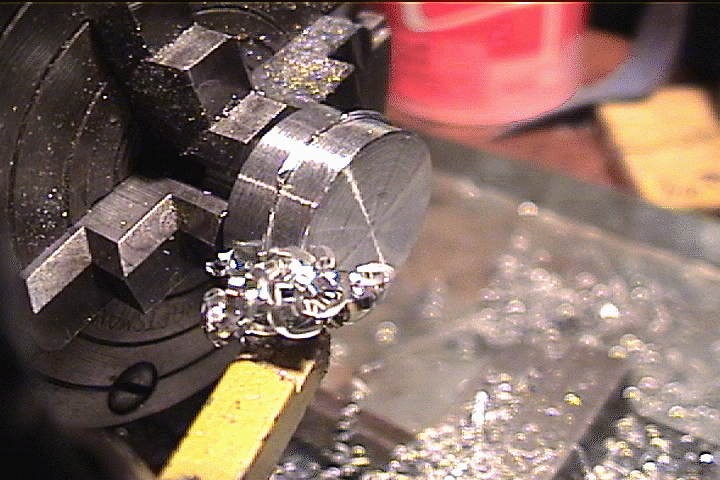
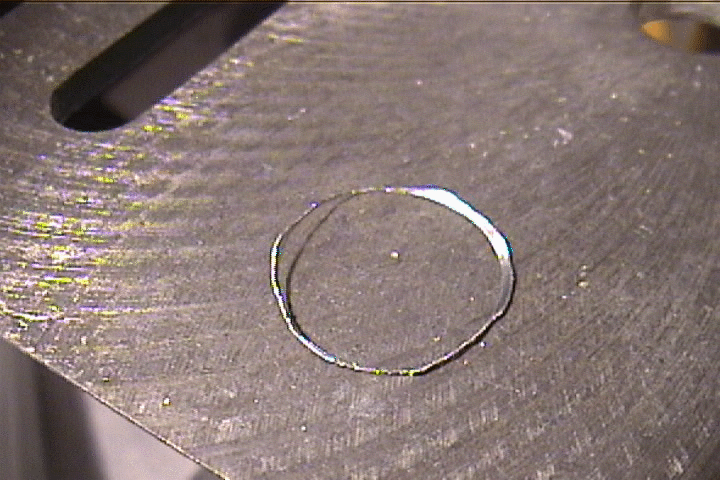
After all that the facing of the part went pretty quickly. You can see a ring around the part in the image. As the facing got close to the turned section, it deformed the overhang slightly. On the final pass it cut the deformed section free, leaving a complete ring of uncut base material behind.
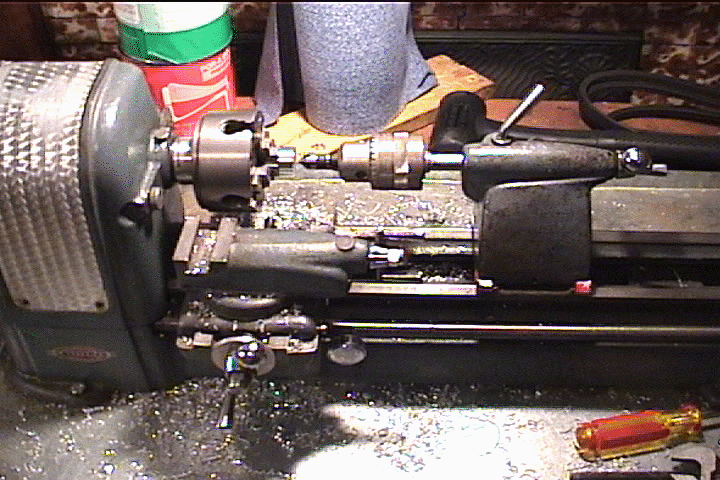
Now completely turned and faced, the hole had to be drilled. First a starter hole was drilled with a countersink. (Not a proper metal countersink, but , you know, the whole 'spare bedroom' thing again.) This was done so that the thin and easily deflected drillbit wouldn't walk off to one side before starting to drill. This is particularly important when drilling the center of a faced surface, because there tends to be a small bump there unless your (skills, equipment) tuple is much better than mine is.
Drilling wasn't enough, though, because drillbits have conical tips. This doesn't always matter, but the standoff needed a flat bottomed hole due to space restrictions. So the hole needed to be bored. Boring is a particularly annoying operation because the tool tends to be much thinner -- and therefore more easily deflected -- than standard lathe tools. This means you have to make each pass several times at each depth until it actually removes enough material.
All that was left was the thread cutting. I didn't actually turn the lathe on, though there are people who advocate doing so. The lathe chuck was just the best way to firmly hold a small, round, oily piece of metal.
And that was it. After about 4 hours I had the finished part.
(All images are fairly large because I'm lazy.)
The drawing I was given to work with is here. (For the record,
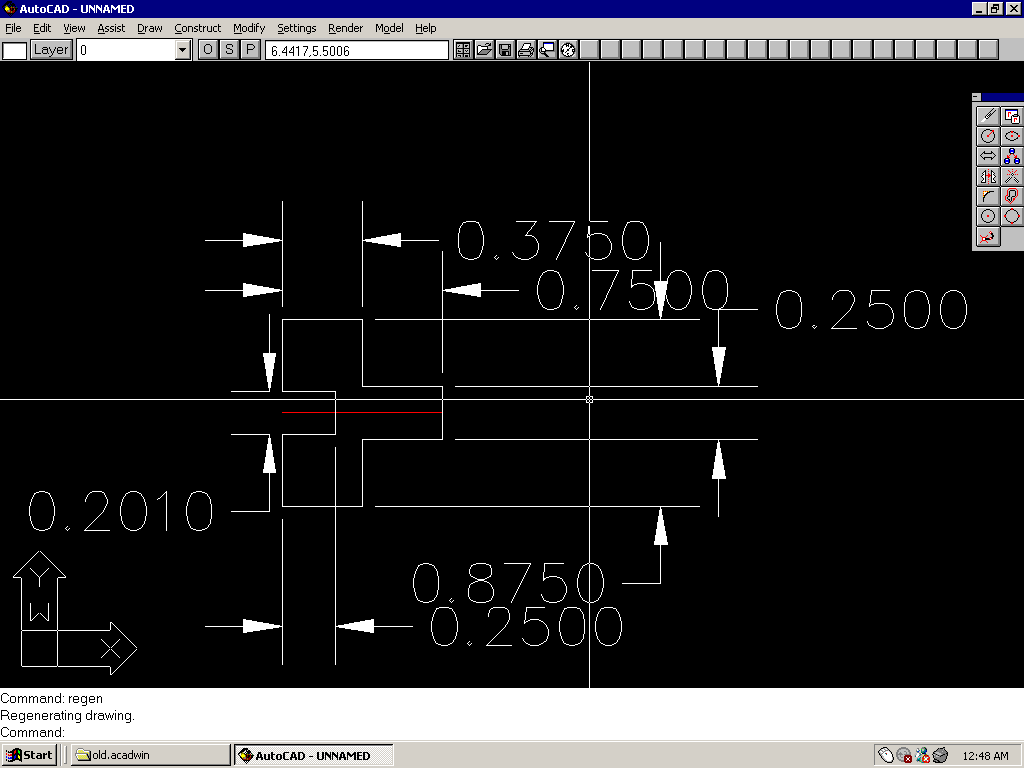 xmurf protests that it is far from his best CAD work.) The part is a standoff for one of the three cameras on the robot. Because of layout issues, the brace it is attached to is 0.375" away from where it needs to be to put the camera at the center. So this widget moves the camera up by that amount.
The first step was to cut a piece of aluminum. (Yay bandsaws! People who give me bandsaws rule.) This piece was then chucked up in the lathe and roughly centered. (People who give me lathes also rule!) The exact center didn't matter at this point, other than making sure that a circle of the correct diameter is actually in the piece as mounted. This was accomplished by lightly touching a sharpie close to the outside edge as it spun. The diameter of the trace is then easily measured.
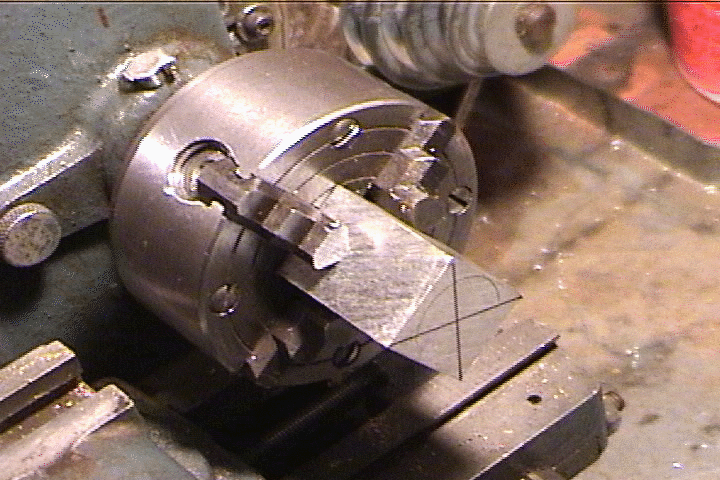
With everything set up, I started turning the piece down. As the target diameter got close, it was checked against a reference with the use of outside calipers.
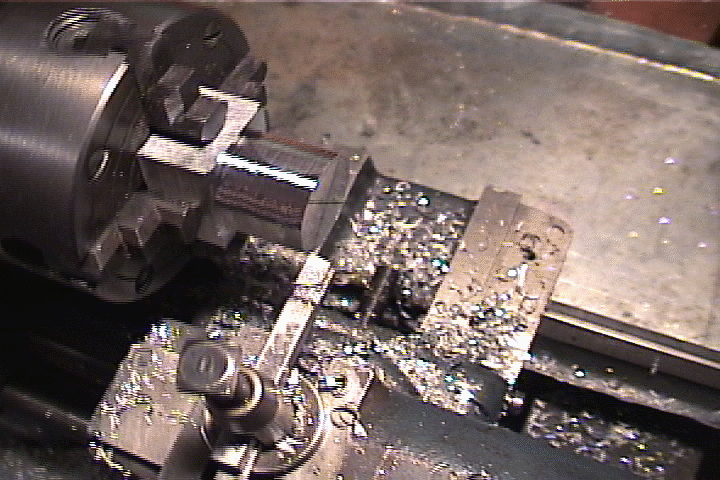
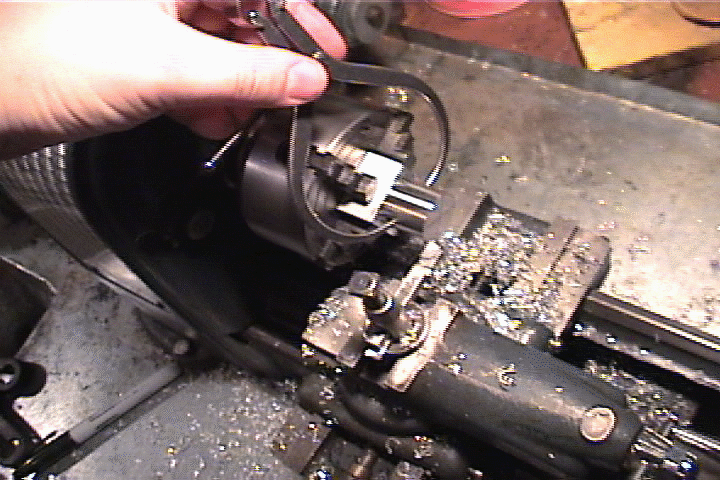
While not as messy as end milling, turning a part can throw up a decent amount of chips. This is made worse when first rounding a square part because you're only cutting from the edge instead of a single continuous cut. My workroom is decently equipped for a spare bedroom, but it's still just a spare bedroom -- with carpet. In order to minimize the obvious problem I was inspired to repurpose part of an old halloween costume. The end result was a perfectly functional chip shield.
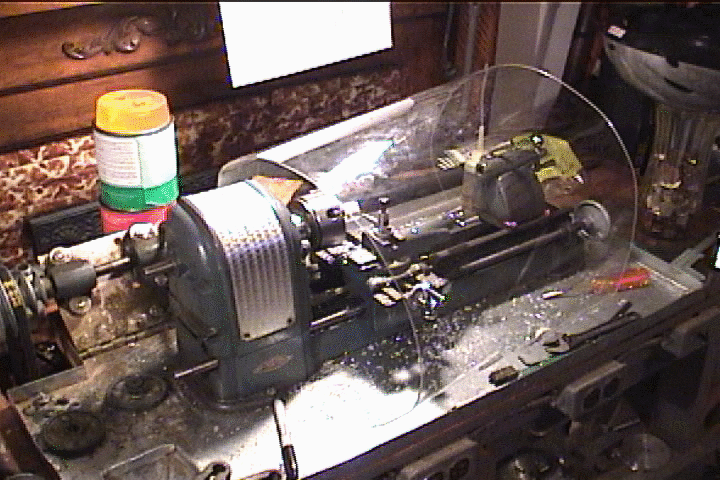
After the entire piece was at 0.875" I then turned the second half down to a quarter of an inch. I'm not very pleased with the surface of the face. I went too deep early on, but I didn't have enough spare material to make that depth consistent. Luckily that face will be hidden when assembled.
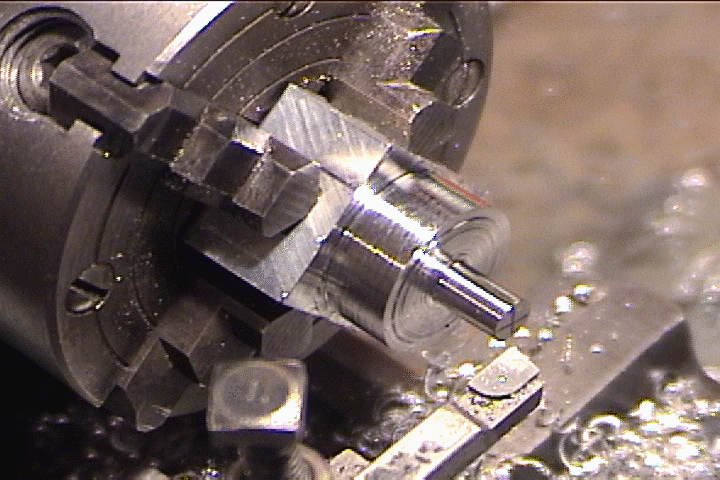
With all the turning done, I proceeded to cut the base off. Looking back I obviously should have octagoned the remaining base after the separation cut. It would have been much easier and left me with a more useful leftover piece. I think it was because I had meant to octagon the original piece but had forgotten and was annoyed that I had forgotten. I'm kinda dumb sometimes. Oh well.
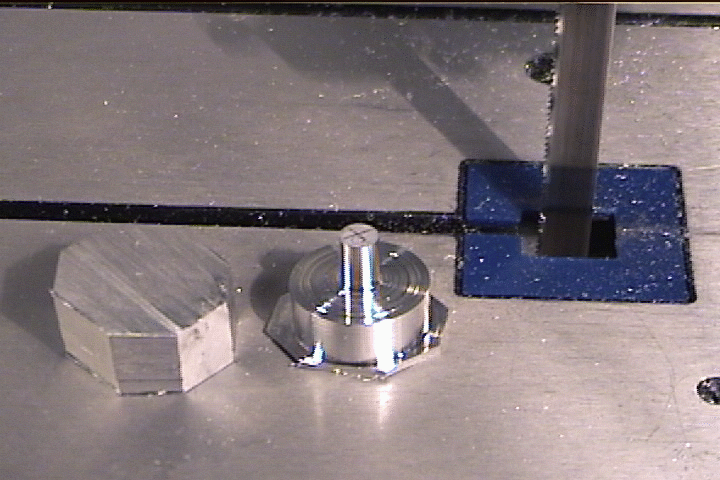
Next I needed to remove the final little bit of the base still attached to the part. I couldn't do it on the bandsaw because it would be too easy to cut into the actual part and the finish would be really ugly. So it needed to be faced off on the lathe. This would also allow me to drill the hole, but it would need to be properly centered to do that.
The chuck on the lathe is an independent four-jaw, which means each jaw moves on its own. This is great for holding oddly shaped parts, but it means that even round parts don't get centered without effort. (The other most common chuck, a three-jaw universal chuck, is basically like the chuck on a hand drill. All three jaws move together, so round parts are centered automatically.) So I had to use a dial indicator to center the part. The dial indicates small in-and-out movements of the shaft. By slowly turning the part this shows which side of the part is sticking too far out. After a lot of tedious adjustments the part ends up centered.
After all that the facing of the part went pretty quickly. You can see a ring around the part in the image. As the facing got close to the turned section, it deformed the overhang slightly. On the final pass it cut the deformed section free, leaving a complete ring of uncut base material behind.
Now completely turned and faced, the hole had to be drilled. First a starter hole was drilled with a countersink. (Not a proper metal countersink, but , you know, the whole 'spare bedroom' thing again.) This was done so that the thin and easily deflected drillbit wouldn't walk off to one side before starting to drill. This is particularly important when drilling the center of a faced surface, because there tends to be a small bump there unless your (skills, equipment) tuple is much better than mine is.
Drilling wasn't enough, though, because drillbits have conical tips. This doesn't always matter, but the standoff needed a flat bottomed hole due to space restrictions. So the hole needed to be bored. Boring is a particularly annoying operation because the tool tends to be much thinner -- and therefore more easily deflected -- than standard lathe tools. This means you have to make each pass several times at each depth until it actually removes enough material.
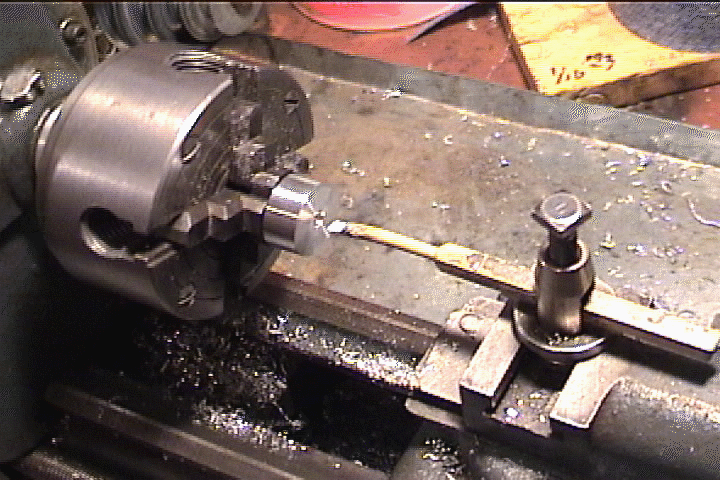
All that was left was the thread cutting. I didn't actually turn the lathe on, though there are people who advocate doing so. The lathe chuck was just the best way to firmly hold a small, round, oily piece of metal.
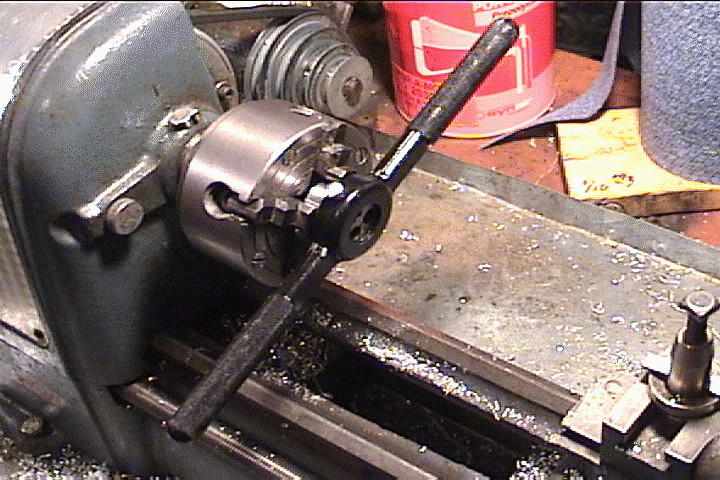
And that was it. After about 4 hours I had the finished part.
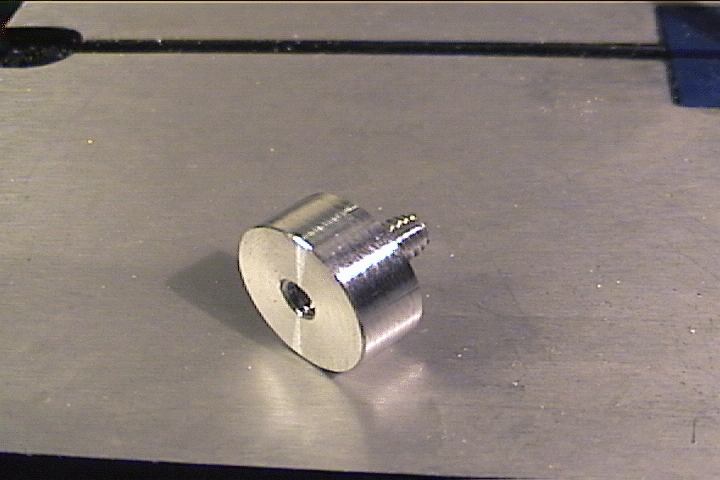
part from partlessness
And it's cool to have the process of something like that illustrated-- I never really get an idea of it, so I often wonder what you're doing in there. ;)
no subject
I told you about the vacuum cleaner mounted under the lathe with the tube hooked to the toolpost sucking all the chips down as fast as they're created idea, right?
Another thing: as you've no doubt noticed, that lathe lacks rigidity and the first cut on a 4-sided object can be kind of unhappy, as it begins to transform into a cylinder. Since you have a bandsaw and all you might consider octagoning the blank. It makes the first cuts go a lot easier and more quickly.
no subject